

tl;dr
- AI in product development means using intelligent tools across research, design, coding and testing so products get built faster with fewer blind spots along the way.
- It is not here to replace product teams, it is here to remove the slow repetitive work that used to eat entire quarters.
- The teams actually winning right now pair AI in software development with real human judgment, never one without the other.
- A solid product development strategy still starts with the customer problem, AI just helps you validate and build it faster than before.
- Stick around and you will know exactly where AI belongs in your next build and just as important, where it does not.
Introduction
A founder I worked with once burned four months and almost eighty thousand dollars on a feature nobody asked for. Nobody tested it. Nobody talked to a single customer before the team started writing code. Everyone just assumed it would land because the idea sounded good in a meeting.
Such mistakes still happen, but not as often now and frankly it is not because founders got smarter overnight.
AI in product development has quietly changed how much a team can learn before they spend real cash committing to a build. This isn’t about replacing designers or engineers with a chatbot, despite what the headlines keep telling us. It’s about bridging the gap between an idea and a working, tested product so fewer teams spend months on end building the wrong thing. Follow me here and you will see exactly where this really helps and where a human still needs to be the one making the call.
What Is AI in Product Development
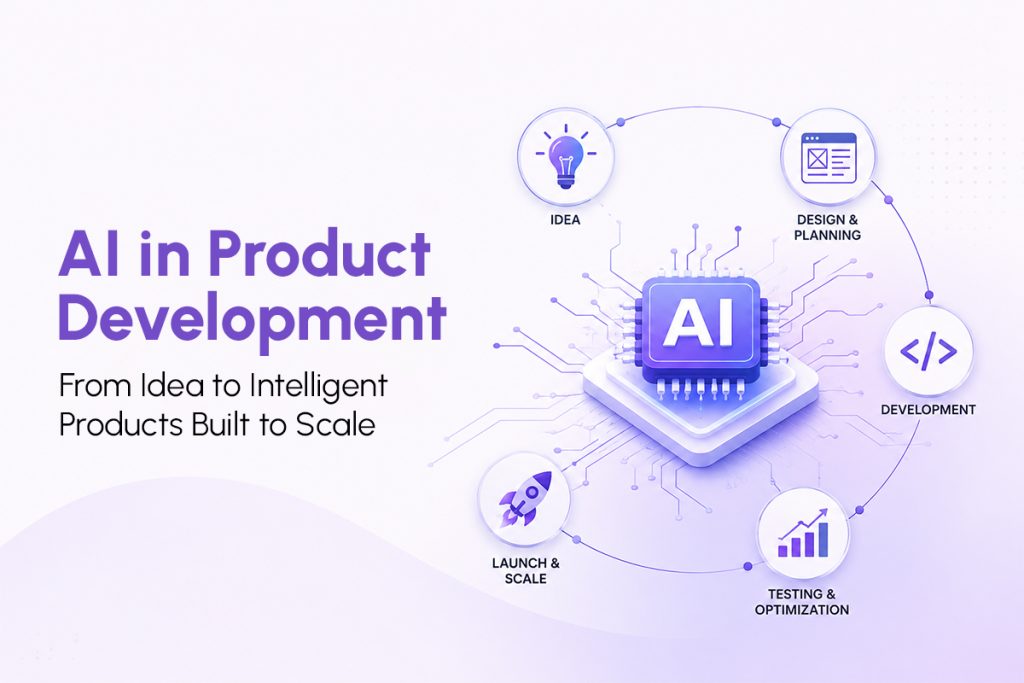
Forget the buzzwords. In product development, AI is just machine learning and generative tools showing up at all stages of the product lifecycle, not tucked away quietly inside the engineering team like some separate department no one talks to. Research, design, coding, testing, even reading feedback from customers, AI is now involved in all of them. It seems where people don’t expect it until they see it in person.
A support ticket gets tagged and summarized before a human even opens it. A design tool spits out three layout directions from one rough prompt instead of a designer staring at a blank canvas for an hour. A pull request gets a first pass review from an AI assistant before an actual engineer looks at it twice.
None of this replaces the actual thinking behind a product.
AI in software development still needs a person deciding what matters, what gets built and what gets quietly killed before it wastes anyone’s time. The tools got faster. The judgment calls did not get any easier and that is the part most vendors selling AI platforms leave out of their pitch entirely.
- Research tools that scan thousands of reviews and support tickets in minutes instead of days.
- Design assistants generating wireframes and component variations almost instantly.
- Code generation and review tools built directly into the daily developer workflow.
- Predictive analytics flagging which features users will actually adopt before launch day even arrives.
Types Of AI In Product Development
Not every AI tool does the same job and lumping them together is exactly where a lot of teams get confused about what to actually spend money on.
Organizations adopting AI across product development have cut development time by up to fifty percent in some cases, according to research covered in this detailed breakdown of 2026 product development trends and the gap between teams using this well and teams still doing everything by hand keeps widening every single quarter that goes by.
Research And Discovery AI
Tools that dig through customer feedback, support tickets and raw market data to find patterns a human team would take weeks to notice on their own.
Design And Prototyping AI
Tools that turn a rough idea into visual layouts and interactive prototypes within hours, work that used to eat up a full design sprint.
Development And Code AI
Assistants sitting right inside the coding workflow, suggesting, completing and reviewing code, cutting down on the kind of repetitive engineering work nobody actually enjoys doing anyway. This is where ai product engineering has moved fastest over the last two years, fast enough that entire teams have had to rebuild how they estimate timelines because the old math simply stopped holding up.
Testing And QA AI
Systems running test scenarios automatically, flagging edge cases and catching bugs before a human tester has even opened the build for the first time.
Why Is AI In Product Development Important
Here is the honest problem most growing businesses run into. Building a product the traditional way takes months and by the time it finally ships, the market has usually moved somewhere else entirely. Customer expectations shift faster than a neat 6 month roadmap can keep pace with.
The real challenge was never a shortage of ideas. The actual bottleneck is speed and validation. Teams either move too slowly and miss their window completely or they rush ahead without validating anything and end up shipping something nobody actually wanted.
Neither path survives in a market this crowded anymore. This is exactly why product development strategy has to account for AI now, not tacked on as an afterthought but built into the actual plan from day one. Businesses that ignore this keep losing ground to competitors who validate faster, build faster and correct course faster, purely because they are working from better information at every single stage. The gap rarely shows up right away. It shows up eighteen months later, when one competitor has already shipped three real iterations and the other is still polishing its first launch.
How AI In Product Development Is Changing Product Development
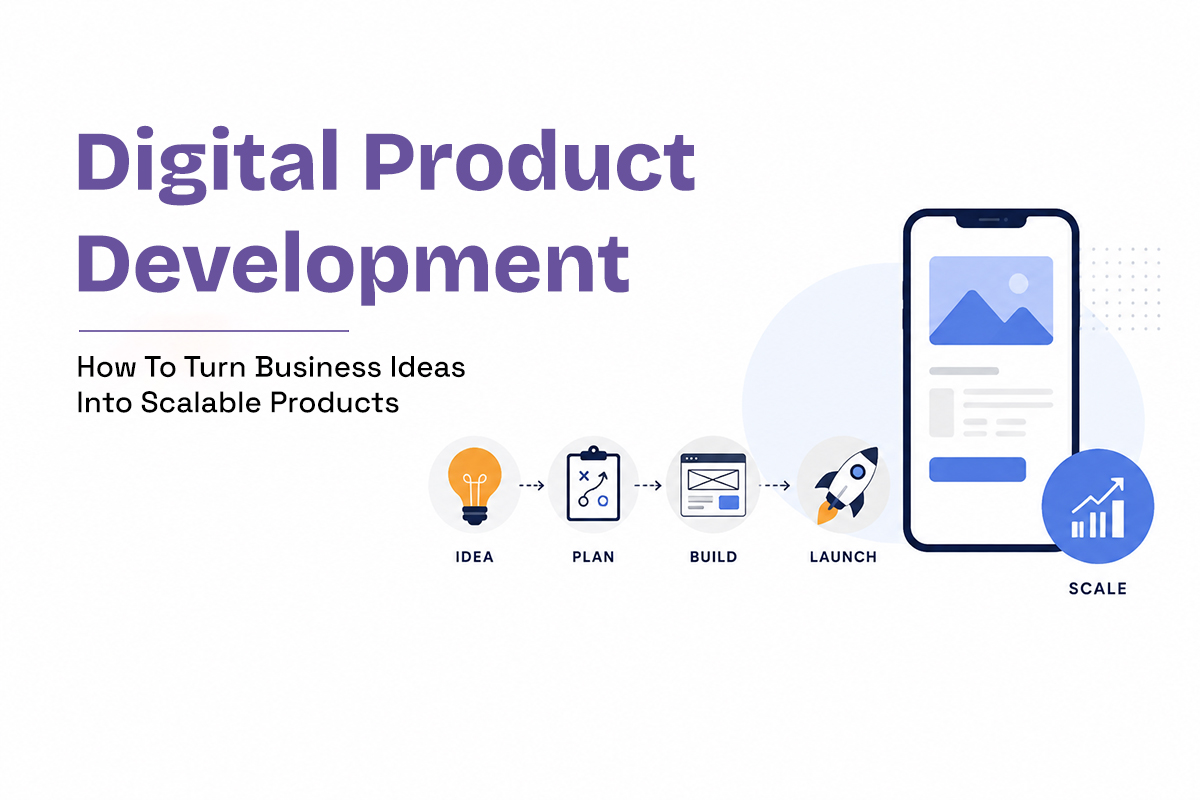
This shift is not confined to one part of the process. It touches nearly every stage, from the first rough sketch of an idea to the day something actually ships to a real customer.
For a closer look at how this plays out stage by stage, this breakdown of AI product development trends from Modus Create covers it well, especially the part about teams restructuring their entire timelines because of it.
Research
AI compresses weeks of manual customer research into a couple of days, surfacing patterns across reviews and interviews that a tired human team would probably miss on a first pass anyway.
Ideation
Instead of a handful of concepts sketched out over a slow week, teams can generate and stress test dozens of directions before picking one, which means weak ideas die earlier and cheaper than before.
Design
Wireframes and interactive prototypes that used to take a design team days now take a few hours, freeing up real time for the parts of design that genuinely need a human eye and taste.
Development Or Build
This is the stage that changed the most. AI assisted coding, automated documentation and instant code review have reshaped how fast a working product can move from concept to something a customer can actually touch and use.
Launch
Post launch monitoring powered by AI flags usage drop offs and friction points within days, not the months it used to take a team to quietly notice a feature was failing in the background.
What Are The Benefits Of AI In Product Development
Faster Time To Market
Cutting weeks out of research, design and testing means products reach real customers while the actual window of opportunity is still open, not after it closed.
Fewer Wasted Builds
Better validation before a single line of code gets written means fewer features get built, launched and quietly abandoned six months later once nobody used them.
Lower Development Costs
Less manual repetitive work translates directly into fewer engineering hours spent on tasks that used to swallow entire sprints whole.
Better Product Market Fit
Continuous feedback analysis means teams catch misalignment early instead of discovering it after a full launch and a disappointed customer base.
Stronger Long Term Scalability
Products built with AI assisted testing and monitoring from day one tend to handle growth with far fewer emergency fixes down the line.
How To Get Started With AI In Product Development
Understand Your Starting Point
Map out where your current process is actually slowest. Adding AI everywhere is a waste of budget when one specific bottleneck is quietly costing you the most time and money.
Identify The Best Use Cases
Start with research or testing, the two areas where AI tends to deliver value fastest without forcing a complete overhaul of how your team already works.
Choose The Right Tools
Pick tools that actually integrate with your existing stack rather than making your team abandon workflows that were already working fine before any of this started.
Build The Right Team
You need people who understand both the tools and the actual product problem, not just engineers bolting AI onto an existing process because it looked good in a slide deck.
Measure Results Or ROI
Track time saved, features shipped and real customer adoption, honestly. If a tool is not moving these within a quarter, it is not the right tool for your team.
The Future Of AI In Product Development
AI MVP Development Becomes The Default
AI MVP development is quickly becoming the default starting point for new products, letting teams test real demand with a working prototype in days instead of the months it used to take.
Full Stack Teams Working Alongside AI
Full stack solutions built by teams that treat AI as an actual working partner, not a gimmick bolted on for a pitch deck, will keep outpacing competitors still doing everything the slow way by hand.
AI Native Product Architecture
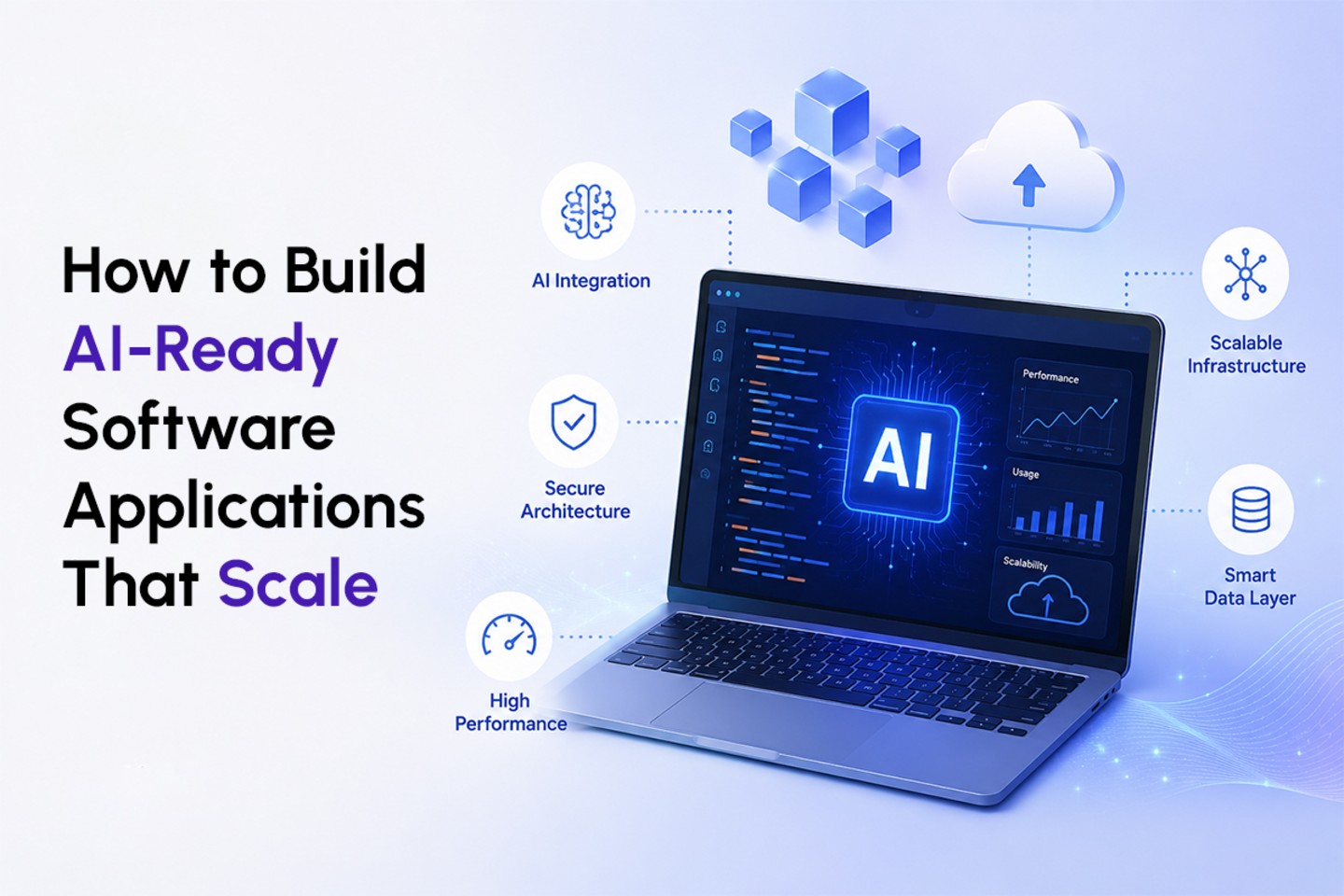
Products that are built from the ground up with AI integrated into the architecture itself, not added as an afterthought that nobody planned for properly.
Ethical Considerations And Challenges
Data privacy, algorithmic bias and quietly leaning too hard on automated decisions are all still real risks worth taking seriously.
Teams need human oversight built into the process itself, not just faster output for the sake of looking fast.
Build Your Next Product With Cuneiform Consulting
None of this works without the right partner sitting across the table from you. A software development company that only writes code will build exactly what you asked for and nothing smarter than that. A real partner asks the harder questions first, actually validates the idea and only then starts building anything at all.
That difference sounds small on paper and somehow ends up being the entire reason some products succeed while nearly identical ones quietly fail six months later. This is exactly how Cuneiform Consulting approaches every single project, pairing ai product engineering with real product strategy so nothing ever gets built purely on a guess. If you are planning your next build and actually want it done right the first time around, reach out to us and start with a real conversation instead of signing a blank contract.
Frequently Asked Questions
What Is AI In Product Development?
AI in product development is the use of machine learning and generative tools across research, design, coding, and testing to build products faster with fewer wasted iterations. It supports human teams rather than replacing them.
How Does AI Help With MVP Development?
AI speeds up MVP development by generating prototypes, test scenarios, and even working code from a rough concept in days instead of months. Teams can validate real demand before committing to a full build.
Is AI Replacing Product Developers?
No, AI is not replacing product developers. It removes repetitive research, coding, and testing work, but decisions about what to build and why still need real human judgment and product experience.
How Much Does AI Reduce Product Development Time?
AI can reduce product development time significantly, with some organizations cutting timelines by up to fifty percent through faster research, prototyping, and automated testing across the development cycle.
How Do I Choose The Right Software Development Company For An AI-Powered Project?
Choose a software development company that asks about your business problem before your feature list, shows real examples of AI assisted builds, and offers ongoing support after launch rather than a one time handoff.