
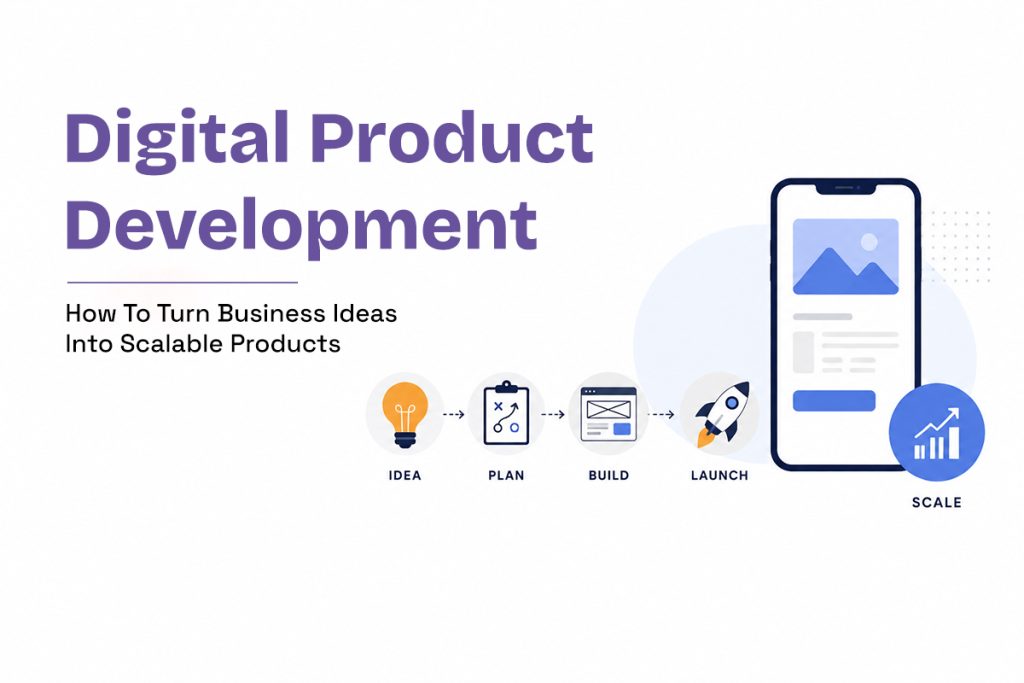

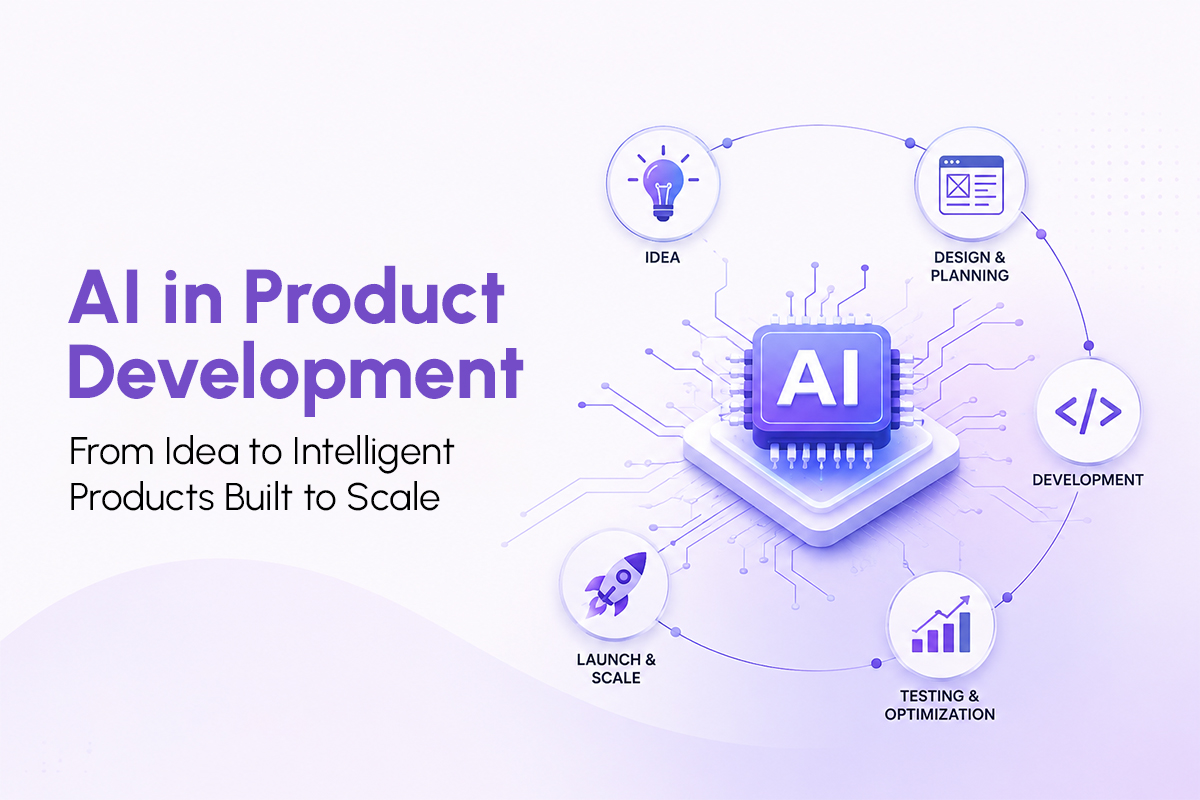

tl;dr. Digital product development is the process of turning a business idea into a working product through research, design and engineering built to actually scale. The businesses winning right now combine a real product development strategy with custom application development instead of stretching off the shelf tools past their limits. This guide covers what product development services actually include, how digital product design fits in and where the digital transformation process tends to break down before it ever reaches launch.
I once reviewed a product roadmap that had been rewritten four times in one year. Four times. Not because the market changed that fast, but because nobody had a real strategy under all the excitement to start with. Everything seemed urgent, everything seemed like the right pivot at the time and eighteen months later the company had spent real money and still had nothing that customers actually wanted to use.
That story is far more common than most founders will say out loud. A good idea and a development team is not enough to create a business idea into a scalable product. It takes a process and this guide walks you through exactly what that process looks like when done properly, backed by real numbers, not vague promises of growth.
What Is Digital Product Development
Digital product development covers everything between a raw idea and a product real customers can actually use, reliably, at scale. It is research, design, engineering and testing working together, not engineering alone carrying the whole weight of the project.
A lot of teams treat this as just the build phase, hand a spec to developers and wait. That approach explains why so many products launch late, over budget and missing the one feature customers actually needed most. Real digital product development starts weeks or months before a single line of code gets written.
I have watched two nearly identical projects go very differently for exactly this reason. One team spent three weeks talking to actual users before writing a spec. The other skipped straight to development because leadership wanted to move fast. The first team shipped something people kept using. The second team quietly rebuilt half the product within six months.
- Discovery work that validates the actual problem before committing resources
- Design decisions that account for how the product will need to grow later
- Engineering built on architecture that will not need a full rebuild in year two
- Testing that catches problems before customers do, not after
Digital Product Development By The Numbers
The market backs up why so many businesses are investing here right now instead of waiting.
| Market Segment | 2026 Value | Projected Value | CAGR |
|---|---|---|---|
| Custom Software Development | 53.5 billion | 178.9 billion by 2033 | 18.8% |
| Custom Application Development Services | 77.94 billion | 112.88 billion by 2030 | 9.7% |
| Global Application Development Market | 164.83 billion | 302.83 billion by 2034 | 8.5% |
| Product Design And Development Services North America | 7.96 billion in 2025 | 21.12 billion by 2035 | 10.25% |
These figures come from recent industry research covered in this custom software development market report and the growth pattern is consistent across nearly every regional breakdown available right now, not just one optimistic forecast.
Product Development Strategy That Actually Works
A product development strategy is not a slide deck built once and forgotten. It is the ongoing decision framework that tells a team what to build next and, just as important, what to skip entirely for now.
Start With The Problem Not The Feature List
Teams that start with a feature wishlist almost always build something bloated. Teams that start with one specific problem tend to ship something people actually use within months instead of years.
Validate Before You Build Anything Expensive
A rough prototype tested with real users beats months of assumptions every single time. One healthcare client used a working demo before writing production code and cut wasted development hours by roughly a third.
Plan For The Second Version While Building The First
Products that scale well were usually designed with growth in mind from day one, even if that second version is still a year away.
Case evidence from a real deployment shows the impact clearly. According to research covered in this custom software development growth analysis, one bank saw a four hundred percent lift in lead conversion and a ninety percent reduction in loan processing time after deploying a custom CRM platform built around their actual workflow instead of a generic template.
Custom Application Development Versus Off The Shelf Tools
Generic software works fine until a business outgrows what it was ever designed to handle. Custom application development exists for exactly that moment, when the workaround has become more expensive than the actual build would have been.
When Off The Shelf Still Makes Sense
Early stage businesses testing an idea rarely need a custom build yet. A generic tool buys time to validate demand without a large upfront investment.
When Custom Becomes The Right Call
Once a workflow becomes core to the business and no existing tool fits it properly, custom application development stops being a luxury and starts being the cheaper long term option.
For a deeper look at where enterprise investment is actually heading, this application development market analysis breaks down the regional and technology trends shaping decisions right now.
The Digital Transformation Process Explained
The digital transformation process is not one big migration project finished in a single quarter. It happens in stages and skipping any of them almost always shows up as a painful fix later.
Assessment
Understanding what actually works today and what is quietly costing the business time and money every single week.
Strategy
Deciding which processes get digitized first, based on impact, not just which team shouts loudest in a planning meeting.
Implementation
Building or integrating the actual tools, ideally in phases that let teams adjust before the whole rollout goes live at once.
Adoption
The stage most companies underestimate completely. A brilliant system nobody actually uses correctly delivers zero value no matter how well it was built. Training, clear documentation and a real feedback loop in the first ninety days matter more than most transformation budgets ever account for.
Recent industry data covered in this software development statistics report shows organizations across nearly every sector accelerating this exact kind of investment heading into 2026 and beyond, driven largely by AI adoption and cloud native rebuilding of legacy systems.
Choosing A Software Product Development Company
A software product development company that jumps straight to a quote without asking real questions about your business is a warning sign worth taking seriously.
Ask How They Handle Scale
Your product today is not your product in two years. The right partner plans for that growth from the very first architecture decision.
Ask For Real Examples
Portfolio screenshots tell you almost nothing. A real conversation about a project that scaled successfully tells you everything you actually need to know.
For further reading on where development budgets and priorities are actually shifting this year, this comprehensive 2026 software development statistics report is worth reviewing before signing with anyone.
Digital Product Design That Does Not Get Rebuilt Later
Digital product design is not just how something looks, it is how the whole experience holds up once real users with real problems start relying on it daily.
Design For The Actual User
Not the imagined ideal user in a persona slide, the tired, distracted, real person actually using the product during a normal workday.
Design With Data Not Just Instinct
Early usability testing catches expensive mistakes before they get built into production code and become far more costly to fix later.
Build Your Next Product With Cuneiform Consulting
Turning an idea into a product that actually scales takes more than a good developer typing fast. It takes a real strategy behind the build from the very first conversation and honestly, most of the expensive mistakes I have seen happened because that strategy conversation never happened at all.
This is exactly how Cuneiform Consulting approaches every project, starting with the business problem, validating it properly and only then moving into design and development. If you are ready to turn your next idea into something real, reach out to Cuneiform Consulting and start with an honest conversation about what your product actually needs before anyone writes a single line of code.
Frequently Asked Questions
What is digital product development?
Digital product development is the process of turning a business idea into a working digital product through research, design, engineering and testing. It covers everything from validating the problem to building something that can actually scale.
How long does custom software development take?
Most custom software projects take three to nine months depending on complexity, with an initial working version often possible in eight to twelve weeks when the discovery phase is done properly.
What is the difference between product development strategy and a roadmap?
A product development strategy is the overall framework guiding what gets built and why, while a roadmap is the specific timeline of features planned within that strategy.
How much does custom application development cost?
Custom application development costs vary widely based on scope, but most small to mid sized projects fall between fifty thousand and two hundred fifty thousand dollars depending on complexity and integrations required.
Why do digital transformation projects fail?
Most digital transformation projects fail due to poor adoption, not poor technology. Teams that skip proper training and change management usually end up with expensive tools nobody actually uses correctly.